Nearly 800 poets entered the inaugural confluence prize, which invited submissions of Japanese short form poems on the theme of death and dying. The editors were deeply moved by these powerful entries. They have expanded our capacity for imagining and illumining what it means to be human, in death and in life. Today we are pleased to announce the winners:
Grand Prize ($300)
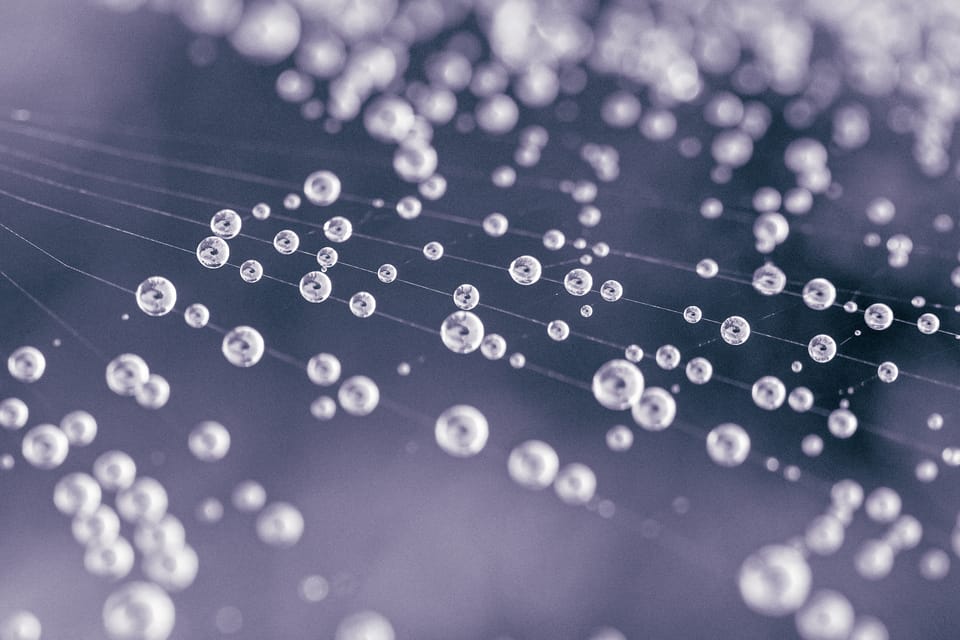
Dew Drops, by Colleen M. Farrelly
Editors' Choice ($50)
hospice half-light, by Deborah Burke Henderson
letting the moon, by Michael Dylan Welch
Night Blooming, by Billie Dee
Quantum Mechanics, by Valorie Broadhurst Woerdehoff
Honorable Mention
a silvered sea, by Jenny Fraser
against war, by Robbie Gamble
Ghost Apple, by Susan Yavaniski
The editors selected the finalists through a multi-round, blind judging process. It was not easy to choose from so many outstanding poems, and we are humbled by and grateful for so many poets entrusting us with their work on this topic. We now present the poems and our commentaries.
Dew Drops
I wander along a park path lined with beech mottling the midmorning sun, a path now slick with mud and steeped in petrichor mixed with cedar and pine. An old ash teeters and creaks in the breeze, slowly hollowed by a borer until only rough bark remains. Beneath its bare branches, a stream meanders—still chilled by a last snow. Across the worn bridge, a young yellow birch settles, felled alone in a midnight gust. Its bark still smooth and soft. Its tender shoots still in bloom. Tomorrow, they’ll clear this bridge, clear all trace of this birch and its roots and its shoots that might have brought shade to a meandering stream.
fresh sawdust
the deep scent of
my love’s casket
—Colleen M. Farrelly
Commentary: A young yellow birch is felled alone in the night, even while an old ash remains creaking in the breeze. A young life has budded and even blossomed. We can only imagine what might have been were more years allowed. All that remains is its sawdust, fresh and final—just like the beloved’s casket. “Dew Drops” recalls Issa’s famous haiku, which closes a haibun on the loss of his infant daughter: this world of dew / is this world of dew / and yet and yet. The world is impermanent. Death is inescapable. And yet, how deep is the scent of my love’s casket. —Ryland Shengzhi Li
hospice half-light
a door opens
to robinsong
—Deborah Burke Henderson
Commentary: Delicate yet unflinching, this poem honors the liminal space of a fading life. The opening line “hospice half-light” sets a scene and a tone that anyone who has kept that quiet vigil will recognize, while the opening door is mundane yet suggestive. Perhaps a nurse arriving, perhaps a loved one stepping away? I, too, have been struck by birdsong after such a night. The poem is masterful in how it conveys this literal reality just as powerfully as its profound metaphor for passing. —Matt Snyder
letting the moon
into your lung
the bullet hole
—Michael Dylan Welch
Commentary: Such an arresting image builds, line by line, from a feeling of “slightly off kilter” to shock and then trauma and death. The first line, subtly, sets this up with the phrase “letting the moon.” How does one “let the moon” do something? Then comes “into your lung”—such a vivid and unexpected image. The last line wallops you, finally making clear the exact violence of this moment. The moon, most commonly an object of beauty and celestial calm, portrayed at a distant, peaceful remove (or reflected benignly in water), is now tied to this clearly horrible, human and terrestrial event. —David Green
Night Blooming
Jessica . . . maybe Jasmine. The name has blurred, but not the vigil. Two rookies in the neonatal ICU, we already knew how long a twenty-ounce newborn could breathe.
blind hunger
a star-nosed mole tunnels
through the dark
Her skin was garnet red when it wasn’t dusky blue. The ventilator kept chirping, and we kept answering it. She was all effort and will.
relentless
song of the mockingbird . . .
a star-blistered sky
By morning, even that had stopped.
falling star
the orchid cactus blooms
only one night
—Billie Dee
Commentary: Infant death is a delicate, tragic topic that is avoided in common society, but “Night Blooming” does not shy away from this. Although a little taboo, the theme of death is handled with care and does not use shock value or romanticized poetics, but simply tells the story in an elegant, matter-of-fact manner. The communal grief experienced by both the parents and those working in the NICU is palpable and pulsates through the storyteller. The author effortlessly pulls the audience into the narrative, relieving readers from the heaviness of the prose by inserting juxtaposed haiku that elevate the story by offering a seasonal lens. “Night Blooming” offers a unique, distinctive perspective that will resonate with readers, regardless of experience. —Rowan Beckett Minor
Quantum Mechanics
As a new spring continues its slow warming, the life held all winter by the ground and by bare branches and limbs breaks forth. Even with a short growing season, buds emerge in these early days of longer light as if they can no longer be contained by the bough. Though winter will come again in a matter of months, wisteria, rhododendron, and daffodils still make their great effort.
all that is seen
Scientists believe that a moon orbiting Saturn might be able to support life. They watch plumes that spray from this mass they call Enceladus and believe it hides deep oceans below its surface. It joins Europa, a moon orbiting Jupiter, and Mars as the most likely inhabitable locations, besides Earth, in our solar system. Ice cover keeps the secrets of both these moons safe for now.
and unseen
I am forced to leave your deathbed for just a short time to attend to pressing business. Sitting in a parking lot, a dog chases a squirrel, the sun sits high above the young leaves of trees, and a day moon adorns a clear sky. Inside my closed car, a sudden wind gust pins me to my seat back—and then the call comes and I am informed of your passing.
first robin
—Valorie Broadhurst Woerdehoff
Commentary: There is much we don’t see: life held in the wintry ground, the oceans of Enceladus, the moment of a beloved’s death. Not seeing, we wonder, will spring return? Is there life orbiting Saturn? Is my beloved still alive? And yet we know. By visible signs: buds, alien plumes, the call. And by the invisible: faith that life will return, that we are not alone. A sudden wind piercing the inside of a closed car. In its famous telling, quantum mechanics says the unobserved remains undecided: Schrödinger's cat is neither dead nor alive until the box is opened. Yet the wind comes before the call. The Nicene Creed opens by calling God the “maker of heaven and earth, of all that is, seen and unseen.” It closes with “we look for the resurrection of the dead.” Between these lines is the first robin sighted this spring. —Ryland Shengzhi Li
a silvered sea gathering dusk
growing old
without you
—Jenny Fraser
Commentary: The brilliance of this piece lies in its layers. First we experience the striking scene of the sea at dusk; the water doesn't merely reflect light, it seems to pull in the darkness. The second line rides this energy, deepening the physical dusk into the narrator’s thoughts of old age. Then, the final line delivers a quiet, devastating punch. The metaphor drops away, leaving only a raw, lonely truth. The narrator isn't just projecting grief onto the landscape; rather, they are honoring a past connection and holding space for what is lost, within a deeply beautiful scene. —Matt Snyder
against war
I offer you
a song sparrow
—Robbie Gamble
Commentary: “I offer you a song sparrow” is a beguiling phrase. A profound gesture, perhaps, as well as a gentle one. Amid the noise, terror and death of war, the poem’s protagonist offers life, beauty and peace. “against war” is simpler to parse (typically: in opposition to), but I mentally filled out the line this way: “against [the backdrop of] war.” Amid the chaos and fury of war, “I” do this little, quiet act. “a song sparrow” resonates too by conjuring the iconic
“Flower Power” photo showing a Vietnam War protestor putting flowers in the barrels of guns. Almost sixty years later, this poem is sadly relevant.
—David Green
Ghost Apple
a box
just for winter
She is shrinking. Her manicured gardens have gone half-wild—grass tall, annuals gone to seed, perennials unpruned. “Good for the birds,” she says. Hug her, even her bones feel hollow. “I wear six petite now,” she giggles, handing me another stack of her sweaters. “I haven't been so small since junior high!”
parting clouds
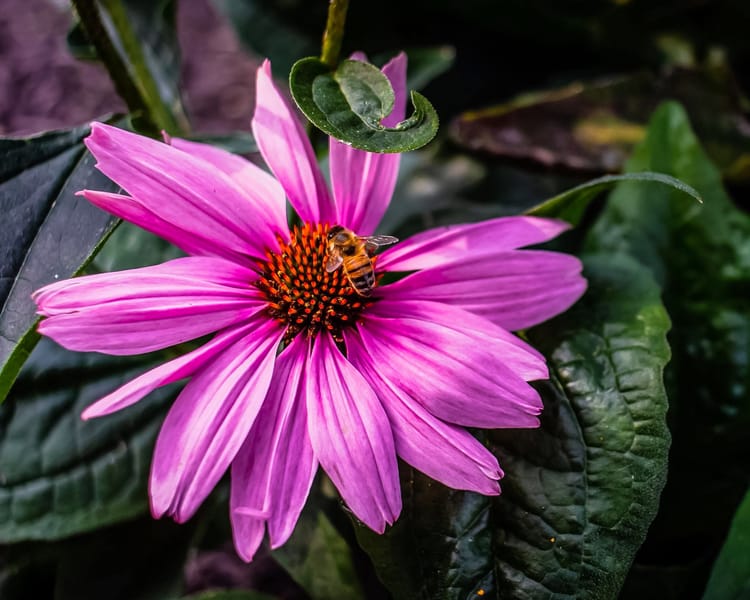
a bee's weight
of sunlight
—Susan Yavaniski
Commentary: The effectiveness of “Ghost Apple” lies in the ambiguity. With how the prose is written, the audience never learns the age of the woman in the story; we have certain details though, such as it’s been some years since she’s been in junior high, that she is rapidly losing weight, and that she is no longer able to tend her garden. The juxtapositions between not only the untended garden and the woman’s untended body, but also the title, prose, and the ending haiku are potent comparisons. The opening duostich is also clever because it adds a layer to the poignant depth of the prose, as well as almost reading like another haiku with it being centered under the title. —Rowan Beckett Minor
Congratulations again to our prize winners! We invite you to continue the conversation by hitting the “comment” button below. Let us know your favorite poem and how it lands for you.
Coming up soon will be a poetry postcard event, where you can exchange postcards with another confluence reader from across the world. Separately, we'll soon be inviting submissions for the third annual confluence Fellowship program. If you or a poet you know might be interested in a year-long deep dive into Japanese short form poetry craft and community, we hope you'll consider submitting.
Until next time!
Sign up for confluence haiku
a new haiku community
No spam. Unsubscribe anytime.


Member discussion